
 The strange, ambitious life of E.R. Burgess
In the winter of 1888, a schoolteacher from Little Bay led an expedition into the frozen interior of Newfoundland to capture wild caribou.
His plan was not to hunt them.
He intended to train them to carry the island’s mail.
It was an idea bold enough to sound ridiculous, practical enough to be taken seriously, and theatrical enough to make its creator famous, at least for a time. The man behind it, Edward Robert Burgess, was many things: teacher, politician, hotel keeper and, repeatedly, a man trying to remake himself.
Burgess’s life was defined by reinvention but the final word in his story belongs not to him, but to his wife Elizabeth, who quietly carried on long after the spectacle had ended.
A Promising Start and an Early Fall
Edward Robert Burgess was born in Halifax in 1851, the son of a contractor who would later serve as a municipal councillor. Like many educated young men of his generation, he turned to teaching, and by the late 1870s he had crossed to Newfoundland, taking a post in the mining town of Betts Cove.
From there, he rose quickly. In St. John’s, he became principal of the General Protestant Academy and Presbyterian Commercial School, and even served as chairman of its board. It was a rapid ascent, perhaps too rapid.
Within a few years, Burgess was entangled in debt cases. Court appearances multiplied. By 1882, he had lost his position. What promise had carried him to the capital had been undone, at least temporarily.
He returned to the mining coast.
Reinvention in Little Bay
Little Bay offered Burgess a second chance.
He arrived as a teacher. He did not remain that for long.
In a town where reputation was built as much in public halls as in workplaces, Burgess thrived. He sang at concerts, acted in plays, played cricket with distinction, and competed in regattas. He won one race aboard the Hiawatha. He joined clubs, chaired committees, and became president of the Terra Nova Billiard and Reading Room Club.
He moved easily across the town’s social and religious lines. Found teaching in Protestant institutions, assisting with community events, and even racing a boat for the Catholic priest. Burgess was, above all, visible.
But there was continuity beneath the reinvention. Debt followed him here too. Court records from Little Bay show that his financial troubles had not been left behind in St. John’s.
The Man Who Stepped Forward
There were moments, though, when Burgess stood out for reasons beyond ambition.
When the Salvation Army arrived in Little Bay they were met with hostility. Its members were harassed and pelted with snowballs. Burgess intervened. He escorted them to their place of worship and later carried them by sleigh to their service.
It was a small act, but a telling one. Burgess had a sense for the public moment and for when stepping forward might matter.
Debate, Withdrawal, and Calculation
In 1888, he entered another public arena: the temperance debate. Burgess challenged Sergeant Wells, a leading advocate of total abstinence, to a formal debate on alcohol. The challenge was accepted.
Then, just days later, Burgess withdrew.
The official explanation was that he had done so on the advice of his seconds. The public response was approving. Still, the episode reveals something essential: Burgess was drawn to the stage, but he was also cautious. He understood reputational risk.
The Caribou Scheme
Then came the idea that would define him.
Mail service in Newfoundland’s outports was notoriously unreliable. In summer, it depended on steamers navigating difficult waters. In winter, it relied on long and dangerous dog-team routes across the island. Delays were routine; frustration was constant.
Burgess saw an opportunity.
In the winter of 1888, he led an expedition from Little Bay into the interior, reaching Grand Lake under brutal conditions. There, he and his party captured four live caribou. His goal was to domesticate them and use them to transport mail across the island.
It was an extraordinary proposal. And it worked at least in one sense.
Newspapers took notice. One letter to the Evening Telegram praised Burgess’s “energy and philanthropy” and suggested he deserved a gold watch or even a knighthood. Whether or not the scheme ever stood a chance of practical success, it succeeded brilliantly as an act of public imagination.
Burgess had done something rare: he made himself seem like a man ahead of his time.
From Experiment to Election
The following year, he turned that reputation into political capital.
In 1889, Burgess ran for office in the Twillingate district on the Whiteway ticket. Though not the leadership’s first choice, he had something more valuable: the backing of the mining communities.
His campaign was theatrical. He travelled aboard the mining company steamer Hiram Perry, greeted by cheering crowds. He won securing 1,174 votes. The celebrations in Little Bay were extraordinary. Torchlight parades, brass bands, cannon fire, and crowds pulling his carriage through the streets marked his victory.
Burgess had completed his transformation. He was no longer the dismissed schoolmaster. He was a public man.
Conflict and the Limits of Reinvention
Power, however, brought scrutiny.
Critics accused him of being too closely tied to the mining company. Others questioned his status as a Nova Scotian representing Newfoundland voters. A public dispute with William Lacey spilled into newspapers and meetings.
Meanwhile, his relationship with alcohol continued to attract attention, both in temperance publications and later in accounts of his time in Labrador where he was accused of smuggling it.
By 1893, his political career had ended. He was not reelected.
Once again, Burgess would need to reinvent himself.
Across the Island on Snowshoes
That same year, he undertook one of the most remarkable journeys of his life.
On February 28, 1893, Edward and Elizabeth Burgess set out from Little Bay on snowshoes, bound for St. John’s. It was a demanding winter crossing. The trek was long, dangerous, and physically punishing.
They completed it.
The journey drew international attention not only for its speed but for Elizabeth’s participation. At a time when such feats were rarely associated with women, her role was widely noted and admired.
It is one of the clearest glimpses we have of her as someone capable of sharing in the same endurance and public presence that defined her husband’s life.
The Bears
If the snowshoe journey showed Burgess’s endurance, the episode that followed showed his flair.
In 1894, he returned from Labrador with two trained black bears.
They were transported by train from Harbour Grace to St. John’s and exhibited at the College Bazaar. It was an unusual spectacle. But it fit perfectly with the pattern of Burgess’s life.
Caribou for mail. A winter crossing on snowshoes. And now, trained bears arriving in the capital.
These were not isolated curiosities. They were part of a consistent instinct: Burgess understood how to capture attention. He understood that reputation could be built not only through office or occupation, but through the memorable, the improbable, and the bold.
The Hotel Keeper
After politics, Burgess turned to business.
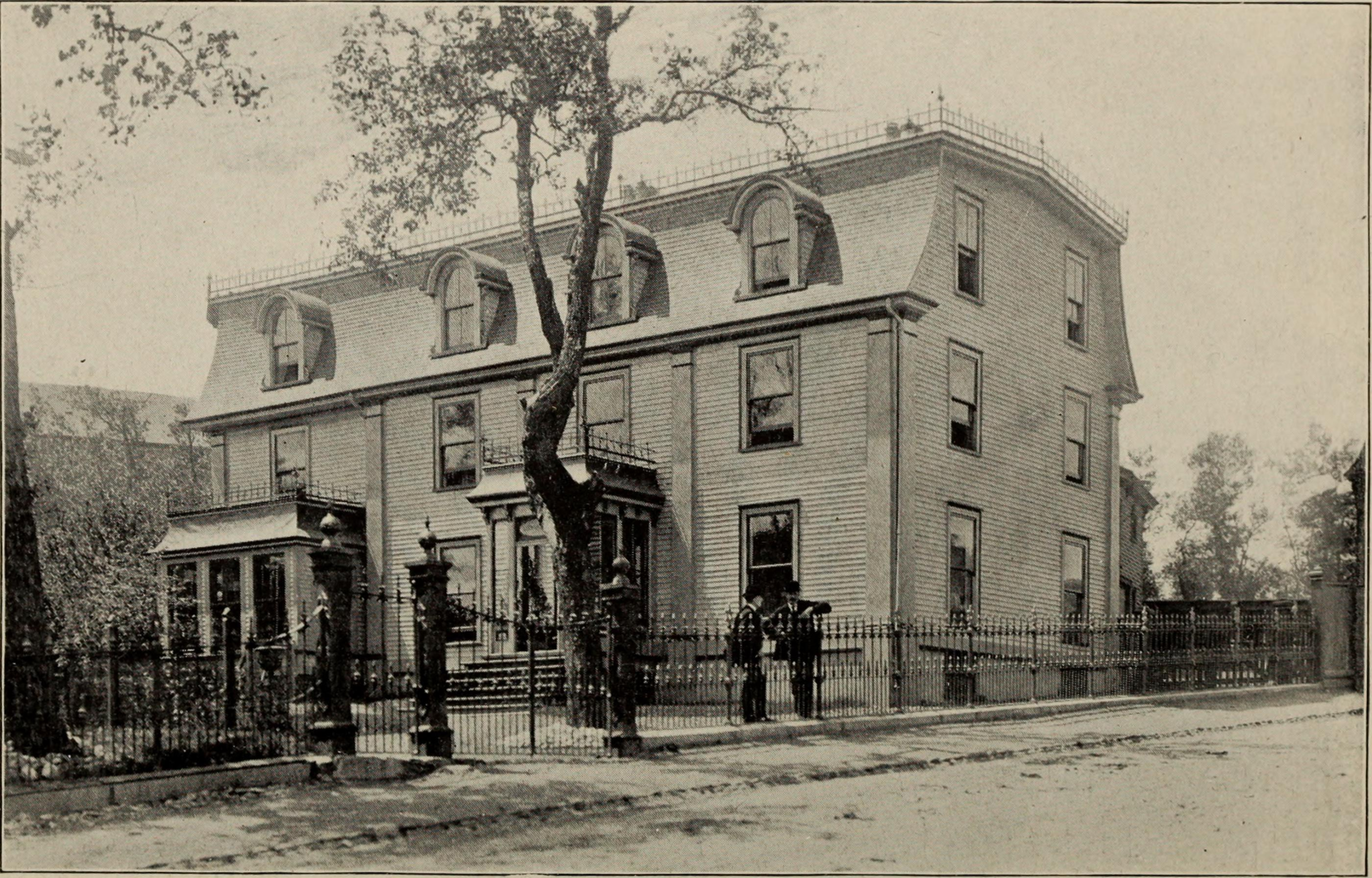
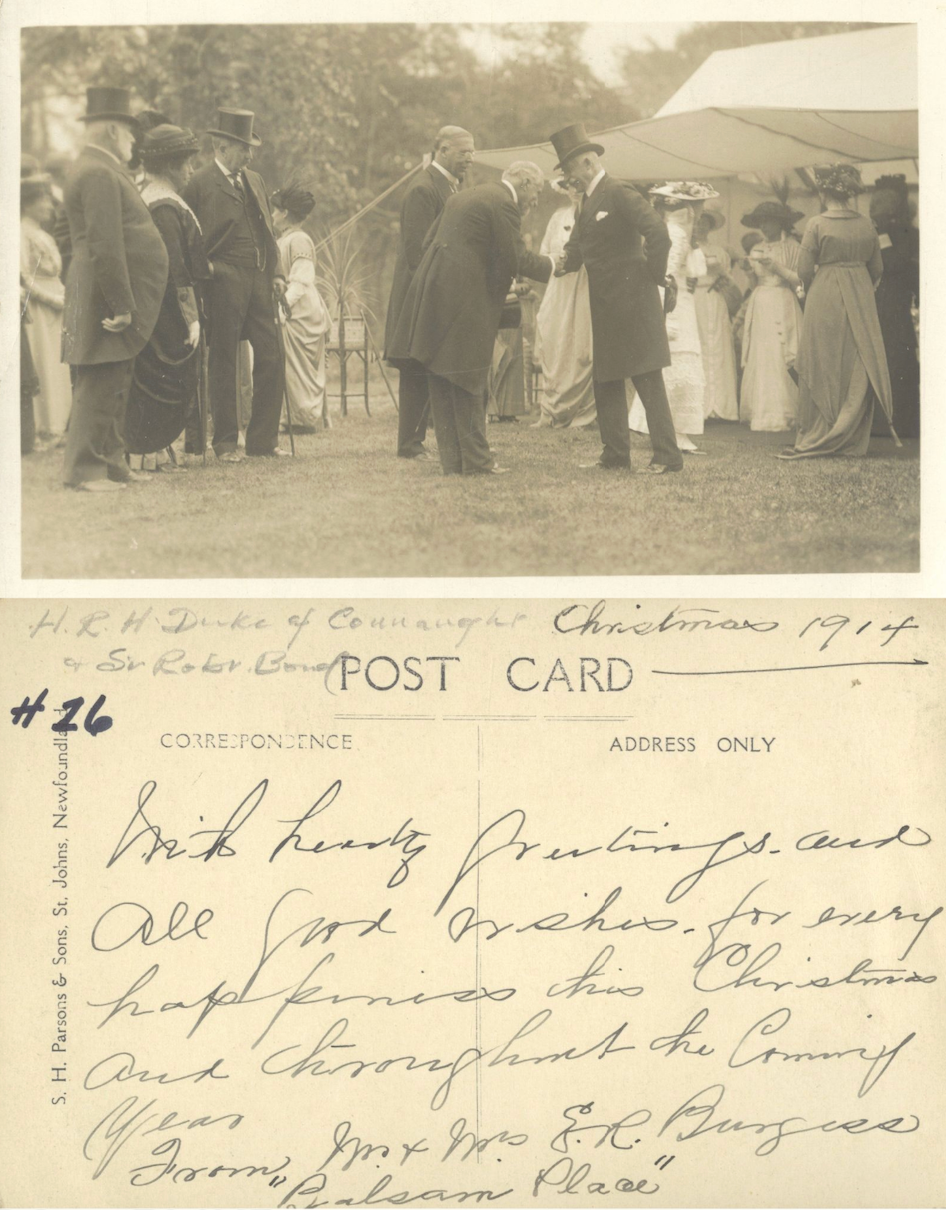
He opened the City Hotel in St. John’s, later renamed the Waverley, and by 1902 had taken over Balsam House, a well-regarded establishment that catered to prominent visitors. He remained active in the hotel trade for decades, moving in elite circles.
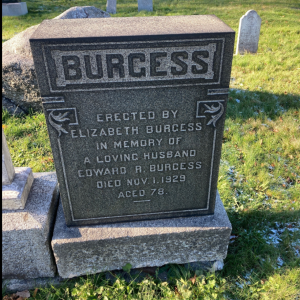 He died in 1929, after a long and varied life.
His estate was modest.
His reputation, less so.
The Woman Who Remained
After his death, the story did not end.
Elizabeth Burgess continued on. She remained connected to the hotel business and was listed as proprietress of the Balsam Hotel in the years that followed. She lived until 1940.
In many ways, her life offers a counterpoint to her husband’s.
Edward Burgess was a man of schemes, performances, and reinventions. He sought opportunity, attention, and advancement, often precariously. Elizabeth’s story is one of endurance. She shared in his most demanding moments, and when those moments had passed, she carried on innkeeping.
The Shape of a Life
E.R. Burgess left behind no single defining achievement. His caribou mail scheme never transformed Newfoundland’s communication system. His political career was brief. His ventures were varied, sometimes unstable.
And yet, taken together, they form something distinctive.
He was a man who refused to remain fixed in one role. A local figure who became a public one. Along the way, he captured caribou, crossed the island in winter, and arrived in the capital with two trained bears.
He made himself difficult to ignore.
It is worth noting how the story settles. Not with spectacle, but with the continuity of Elizabeth’s innkeeping.
Perhaps that is the truest measure of the life they built: one defined not only by ambition and invention, but by the ability, quiet or otherwise, to endure.
Sources:
- 1902 – Image of hotel from Moses Harvey
Birth & Age Records
- 1851 – Birth year deduced from headstone
- 1855 – Birth year listed on immigration record to Halifax (June 1915), Canada Passenger Lists, 1881–1922
- 1857 – Birth year listed on immigration to New York (March 11, 1912), Ellis Island Passenger Lists, 1892–1925
- 1857 – Birth year inferred from 1889 voters list
- 1858 – Birth year listed on alternate 1912 New York immigration record, Ellis Island Passenger Lists
- 1859 – Birth year listed on 1921 New York immigration record, Ellis Island Passenger Lists
- March 6, 1859 – Birth date listed in 1921 Census
1877
- Arrival in mining region estimated between 1877–1879 (Evening Telegram, Dec. 31, 1889)
- March 15 – Witness at Apblet/Prole wedding, Betts Cove schoolhouse (Mission of Tilt Cove Marriages, 1869–1882)
1878
- Left Nova Scotia for Little Bay Mines (Halifax Herald, Feb. 14, 1890)
- Left Betts Cove teaching post for St. John’s (Newfoundland Quarterly, Vol. 88, No. 4, Summer 1994)
- Appointed principal of General Protestant Academy and Presbyterian Commercial School; early inspection favourable (Journal of the Legislative Council)
1880
- William D. Morrison v. Edward R. Burgess – court appearance (Supreme Court records)
1881
- Immigration to Newfoundland (1921 Census)
- Chairman, Board of Directors, General Protestant Academy (Supreme Court: Burgess v. Thorburn)
- Oct. 8 – Teaching in St. John’s (The Telegram)
- Nov. 10 – Advertised for assistant (Evening Telegram)
1882
- William D. Morrison v. Burgess – debt case (Supreme Court records)
- Schoolmaster in St. John’s (Supreme Court records)
- Dismissed for debt (Newfoundland Quarterly, Vol. 88, No. 4, Summer 1994)
- Arrival from Halifax (Affidavit, 1926)
1883
- Feb. – Performed “Always Do as I Do,” Public Hall (Twillingate Sun)
- March 12 – Acted in Ivery Inch a Gintleman (Twillingate Sun)
- July–Aug. – Cricket matches (Twillingate Sun; Evening Telegram)
- Aug. 3 – Won regatta race aboard Hiawatha (Evening Telegram)
- Oct. 1 – Teacher in Little Bay (Wells, All Quiet, p.18)
1884
- June – Trustee, Presbyterian Church (Moncrieff, History of the Presbyterian Church in Newfoundland)
- Business arrangement with Huestis leading to later court case (Twillingate Sun, Sept. 25, 1886)
1885
- Burgess v. Huestis – debt case (Supreme Court records)
- Began work as mining contractor (Evening Telegram, Dec. 31, 1889)
1886
- Cooke v. Burgess – debt case (Supreme Court records)
- In charge of Loading Wharf dock; partnership with George Miller (Daily Colonist, Sept. 20, 1886)
- Sept. 18 – Court case heard (Daily Colonist)
1887
- Sept. 20 – Rifle Club address (Twillingate Sun)
- Dec. 5 – Letter regarding S.S. Plover accident (Evening Telegram)
1888
- Feb. 12 – Assisted Salvation Army officers (Twillingate Sun)
- March 3–14 – Temperance debate challenge and withdrawal (Twillingate Sun; Wells)
- March 17 – Assisted Brass Band (Evening Telegram)
- March–June – Travel via Falcon and Glendale (Lind ledger)
- Sept. 22 – Opened butcher shop with Miller (Twillingate Sun)
- Winter – Caribou expedition to Grand Lake (Evening Telegram, Dec. 3, 1888)
1889
- Jan. 10 – Donation to Parnell Defence Fund (St. John’s Colonist)
- March 23 – Terra Nova Reading Room Club founded (Twillingate Sun)
- May–July – Political candidacy emerges (Twillingate Sun; Evening Telegram)
- Campaign supported by mining company (Evening Telegram; Colonist)
- Nov. – Elected MHA, Twillingate district (1174 votes)
- Public celebrations described (Evening Telegram)
- Dec. 31 – Departure to St. John’s (Evening Telegram)
1890
- Jan. 7 – Letters re: Little Bay mine (Evening Telegram)
- Feb. 14 – Election praised in Halifax (Halifax Herald)
- March–Sept. – Criticism and petitions (Evening Herald; Harbour Grace Standard; Terra Nova Advocate)
1891
- Appointed sub-collector, Labrador (Affidavit, 1926)
- Justice of the Peace (Twillingate Sun)
- Credited with public works in Little Bay (Evening Telegram)
1892
- Commissioner of Wrecked Property (Almanac)
- Temperance criticism (Water Lily, Feb. 1892)
- Continued petitions for infrastructure (Harbour Grace Standard)
1893
- Opened City Hotel (Encyclopedia of Newfoundland and Labrador)
- Feb. 28 – Snowshoe journey from Little Bay (Evening Telegram)
- Labrador service; criticism by Curwen (Rompkey, Labrador Odyssey)
- Nov. 20 – Defeated in election (Evening Herald)
1894
- Returned from Halifax (Evening Herald)
- Commissioner appointment (Weekly News)
- Oct. – Returned with trained black bears; exhibited (Evening Herald; Evening Telegram)
1895
- Labrador duties described and criticized (Evening Telegram)
- Speed voyage aboard Grand Lake (Evening Herald)
- Continued Labrador service (Evening Telegram)
- Oct. 28 – Reported gold discovery (Evening Herald)
1896–1898
- Customs roles and travel (Evening Herald; Twillingate Sun)
- 1898 – Travel to New York for mining syndicate (Evening Mail)
1899–1903
- Proprietor, Waverley Hotel (Parsons’ Xmas Annual)
- Took over Balsam House (Harvey, Newfoundland at the Beginning of the 20th Century)
- Continued Labrador service until 1903 (Affidavit, 1926)
1906–1921
- Deaths of parents (Evening Mail; Montreal Herald)
- Financial complaint (1910) (Journal of the House of Assembly)
- Travel records (Ellis Island; Canada Passenger Lists)
1924–1926
- Continued tenancy of Balsam Hotel (Will of James Carter)
- 1926 affidavit on Labrador boundary (Privy Council records)
- Mrs. Burgess listed as proprietress (Hotels and Boarding Houses in Newfoundland)
1929 (Death)
- Nov. 1 – Death of E.R. Burgess (Liberal Press)
- Estate left to Elizabeth Burgess (Newfoundland Will Books)
1930–1942 (Aftermath)
- 1930 – Elizabeth Burgess, manageress (Canadian Progress)
- 1938 – Burgess remembered in mining history (Observer’s Weekly)
- July 15, 1940 – Death of Elizabeth Burgess (Observer’s Weekly)
- 1942 – Estate bequeathed to Church of England Orphanage