
I was quite confident that I knew Little Bay’s first three Mine Managers. I had written on the tenures of the German Adolph Guzman, the Australian E.C. Wallace, and the Scotsman Andrew Whyte. As far as I was concerned, the early leadership was settled.
I was wrong.
The trouble began with a small, bothersome reference: a “Manager Rapter” attending the Valentine’s Day concert of 1882. At first, I dismissed it as a curiosity. But the more I looked, the less sense it made. Neither Guzman’s departure nor Wallace’s arrival had firm dates. I had assumed they overlapped. They hadn’t. There was a gap—and someone had filled it.
Mr. Rutter
Clarity came from a retrospective article in the Evening Telegram recounting Little Bay Mine’s early leadership. It listed the first three managers as Guzman, Rutter, and Wallace.
That was the moment everything clicked.
“Rapter” was not a man at all—just a misspelling. I had been missing an entire Mine Manager.
With the correct name, the trail opened. References began to appear. One of the most useful came from Wendy Martin’s Once Upon a Mine, sourced to the Whiteway papers. I contacted Special Collections at MUN, only to run into another problem: Rutter never signed with his first name. In documents, he was simply “Rutter.”
The breakthrough came, once again, from Milt Ansty, who located a letter bearing Rutter’s initials: W.R. Rutter.
From there, the pieces began to fall into place. I suspected he was Cornish. With initials, a likely origin, and a professional profile, I began tracing him through mining journals, Cornish newspapers, and eventually the English census. That final source provided his birth and death dates.
With that foundation, the scattered references came together into a coherent life.
Allow me to introduce Mine Captain William Roberts Rutter.
Biography
William Roberts Rutter (1825–1888) was born in Phillack, Cornwall, the son of William and Ann Rutter. His father was a tin miner, and like many Cornish families, the trade passed to the next generation.
Rutter began as a tin dresser, but he did not remain there long. By 1864, he had risen to become an underground agent under Mine Manager Richard Pryor at the Levant Mine—an indication of both skill and trust.
In 1865, he married Jane Earl Dockett in Devon. Three years later, he was working as a mining engineer. From that point on, his career took on an increasingly international character.
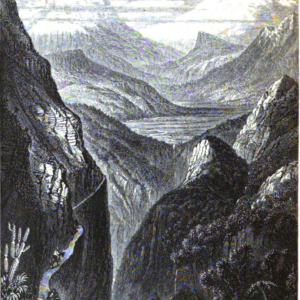 Peru
Peru
In 1868, Rutter was contracted by Henry Weymouth for an ambitious overseas project. On December 2, 1869, he departed Southampton aboard a Royal Mail steamer, bound for Peru.
He would remain there for nearly two years.
While he was abroad, his daughter Frances was born in England. His wife and newborn child remained at home, living with a domestic servant—a pattern that would repeat throughout his career.
In Peru, Rutter supervised a team of English technicians tasked with draining the Cerro de Pasco silver mines and sinking new shafts. During this time, he documented his observations, which were published in 1871. His work reflects both technical expertise and the growing British interest in foreign mining ventures.
After completing the assignment, he returned to England and resumed work at West Seton Mine through the 1870s.
Newfoundland
Rutter first appears in Newfoundland in 1881, a pivotal year for the island’s northern mining region. Baron Ellershausen had sold the operation in January, and a transition in management followed as the Newfoundland Consolidated Mining Company came under British ownership.
Rutter was brought in that fall.
His first posting was at Crescent Lake, likely referring to the Roberts Arm operation. There, he quickly became embroiled in a dispute with Captain Cleary, who owned the mine but had leased it to the company. The disagreement centered on grants owed.
Rutter’s response was… memorable.
Frustrated, he recommended abandoning the site—and before leaving, he smeared the ore exposures with tar. It was a petty and vindictive act, and it offers a rare glimpse of his temperament. Rutter was clearly not a man to cross.
Shortly afterward, he appears at Little Bay.
We cannot fix the exact date of his arrival, but the range is clear. Guzman is last confirmed at Little Bay during the June 1881 fire. Rutter’s first definite appearance is at the Valentine’s Day concert in February 1882.
He likely arrived in late 1881.
His tenure was brief. By the summer of 1882, E.C. Wallace had taken over. The last firm reference to Rutter in Little Bay comes from September 9, 1882, when he loaned the Hiram Perry to Dr. Stafford for travel to Twillingate. This likely places his departure around that time.
Norway
After leaving Newfoundland, Rutter returned to England and resumed work at West Seton.
In 1884, he was selected by a government surveyor to inspect a mining operation in Norway—another international assignment. He spent August of that year there, once again documenting his findings, which were later quoted in the Mining Journal.
Taken together, his work in Peru, Newfoundland, and Norway suggests a pattern. Rutter appears to have been the kind of man brought in when expertise was needed—someone capable of assessing, stabilizing, or advancing mining operations in uncertain conditions.
Notably, his family did not accompany him on these ventures. Census records show his wife and daughter remaining in England during his travels, and there is no evidence they came to Newfoundland. Home, for Rutter, remained firmly in Cornwall.
 Later Life
Rutter returned, as he always did, to England. By 1887, he was Mine Manager at West Seton.
That June, he narrowly escaped death. While ascending a shaft in a skip, it jumped its runners and began swinging violently. Unable to signal the surface, he believed he was finished. Fortunately, the lander noticed irregular movement in the rope and stopped the lift, saving his life.
It bought him only a few months.
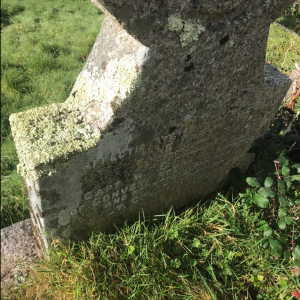
Rutter died in Cornwall in January 1888.
He was succeeded by Captain James, and the section of the mine he had worked became known as “Rutter’s Rise.” He was remembered in The Cornishman as a highly esteemed manager.
In 1896, the Evening Telegram cited him as one of Little Bay’s notable early leaders—the same article that corrected his name for me – “Rapter” had been resolved and William Roberts Rutter’s story was found.
Thanks for reading!
Sources:
Biographical timeline:
1825 – William Rutter born to William and Ann Rutter at Phillack, Cornwall, England
1825, May 15 – William Roberta Rutter baptized in Cornwall (Births and Christenings)
1859 – William Rutter at Buller and Bertha mine (Morning Chronicle, July 30, 1859)
1861 – William Rutter living with parents at Cornwall age 34. His father was a tin miners and he was a tin dreyser (English census, 1861)
1864 – W.R. Rutter was underground agent under Manager Richard Pryor at Levant mine
1864 – At St. Just (Geological survey)
1865 – At St. Just (Geological survey)
1865 – William Roberts Rutter married Jane Earl Dockett in Devon (Marriage Index)
1868 – Contracted to go to Peru. Installation by W.R. Rutter, English engineer. Company of technicians hired by Henry Weymouth (Mccarthy, 1994)
1869, April 13 – Birth of daughter Frances Rutter
1869, June 6 – Baptism of daughter Frances Rutter
1869, Dec 2 – Mr. Rutter sailed from Southampton to Peru to drain the silver mines of Cerro de Pasco (Cornubian and Redruth Times, Dec 3, 1869)
1871 – W.R. Rutter is absent from the house in Tuckingmill, All Saints, Cornwall, England where his wife and daughter are living with a domestic servant (1871 Census)
1871, Feb 24 – W.R. Rutter wrote his findings on Peruvian mining while still in Peru
1871, May – They published his findings on Peruvian mining in The Mining Journal on May 6 and The Cornish Telegraph on May 10
1871 – He left Peru after staying there for nearly two years
1872, June 24 – Captain William R. Rutter is mine agent of Tuckingmill in the parish of Camborne (Mining licence, Gustavus Mine, Camborne)
1873 – William Robert Rutter listed as mining engineer in Cornwall (UK, City and County Directories)
1878 – In West Seton (Geological survey)
1881 – William R. Rutter listed as living with wife Jane E. Rutter and daughter Frances Rutter in Camborne, Cornwall, England. His job is given as Mining Engineer (1881 Census)
1881, Fall – Mr. Rutter was the Mine Manager at Crescent Lake when frustrations with Mr. Cleary contributed to his suggestion that the Consolidated Mining Company leave it after smearing the ore exposures with tar (Martin via Whiteway papers)
1881, Dec – Captain Rutter and Captain Bennett take the Hibernian from Liverpool to St. Johns (Harbour Grace Standard, Dec 17, 1881)
1882, Feb 14 – Mine Manager Rapter present at Valentine’s Day concert (TS, March 10, 1882)
1882, March 14 – W.R. Rutter with the Newfoundland Consolidated Mining Company (Letter)
1882, March 16 – Rutter at Little Bay when he telegraphs Whiteway (Telegram)
1882, June 9 – Letter to Whiteway from Little Bay
1882, July – Letter to Whiteway from Little Bay
1882, Sept 9 – Manager Rutter gave Dr. Stafford the use of Hiram Perry for trips to Twillingate prior the doctor’s move there (Twillingate Sun)
1883, March 15 – Gone from Little Bay (Whiteway docs)
1884, Aug – Captain Rutter sent to Norway (The Mining Journal Railway and Commercial Gazette, Vol. 58, Jan 7, 1888)
1886, Nov – W.R. Rutter and Samuel Bennetts at West Seton (Mining Journal)
1887. March 17 – Rutter’s report on West Wheal Seton mine (The Cornishman)
1887, June 9 – Mine Manager Captain W.R. Rutter had a narrow escape (The Cornishman)
1888, Jan 18 – William Roberts Rutter died in Cornwall (Probate)
1888, Feb 8 – William Roberts Rutter’s will was proved by Nicholas Langdon in Camborne, Cornwall (Index of Wills)
1888 – Captain James takes over as Mine Manager of West Seton mine following the death of Captain Rutter (The Mining Journal Railway and Commercial Gazette, Vol. 58)
1896, April 9 – Mr. Rutter remembered as a good mine manager (Evening Telegram)
1923 – Death of wife Jane Earl Dockett (1838-1923)
1943 – Death of daughter Miss F. Rutter (1869-1943) in Camborne age 74 (The West Briton, May 6, 1943)
Little Bay Mine context
1880, Sept – Baron Ellershausen announces sale of mine to an American company (Martin)
1880, Dec – The Baron’s board refused the sale
1881, Jan – The Baron sells it to a British company
1881, Jan – First mention of a change of officials (HGS)
1881, March – Rev. Whittier asks to stay for another year in order to meet the new mine managers when they arrive (The Witness)
1881, June – This is the last time I can put Guzman at Little Bay
1882 – Guzman sweeps out Stirling mine as his final act in Newfoundland
1882, May – Guzman’s name on grant
1882, June – Rev. Whittier mentions that men of the Betts Cove Mining Company were all gone and the number of Presbyterians was steady dropping (The Witness)
1882, Summer – Wallace takes over from Rutter